Junk
Naked LunchJunk is heroin and, more broadly, the system of need that gathers around its use. It gives brief, powerful relief and makes obtaining the next dose the measure of time; at the same time, it binds users into a dispersed social world and gradually narrows their emotional and bodily lives. The book presents addiction not as a single private habit but as a recurring relation among a drug, a body, and a network of people who seek, supply, remember, and endure it.
Definition and the Network of Need
Junk’s power begins with a sharp contrast between the force of its immediate effect and the persistence of the need that follows. Cocaine is described as producing a rush that rapidly gives way to the desire for another dose, while the absence of supply redirects the user toward eating, sleeping, and forgetting. The account sets that short-lived cycle beside heroin addiction, where need becomes a durable organizing condition rather than an isolated episode of pleasure.
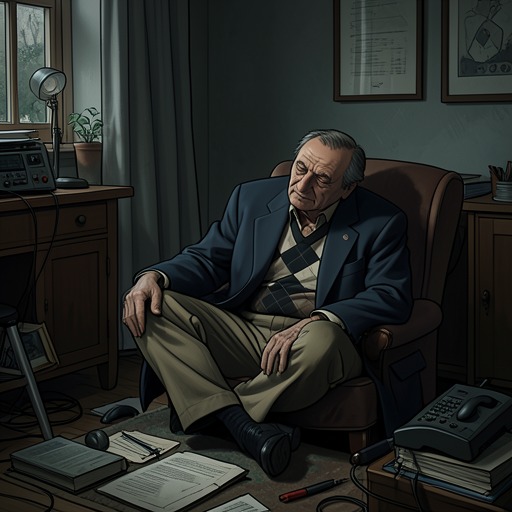
That condition has a social geography. An older supplier, Bart, makes rounds among former users and other people connected to the old drug scene, including customers known through Bill’s contacts. He brings them a few hours of relief, and the narrator accompanies him once. The scene presents supply as a form of contact with people otherwise marked by age, illness, and isolation: addiction links them through recurring need even as it leaves them physically and socially diminished.
The network extends far beyond a single neighborhood. The book imagines users in Yemen, Paris, New Orleans, Mexico City, and Istanbul, connected by what it calls a worldwide network and by the Connection. The Connection appears in different places and circumstances: in a Mexican City room, at the automat, and in an urban pursuit. Its reach makes addiction seem less like a local subculture than a repeated pattern of demand and supply crossing borders and populations.
Pleasure, Withdrawal, and Compulsion
The book describes the drug’s appeal through the cycle it creates. A dose can produce intense pleasure, but the desired effect is fleeting; the user soon wants another. The prospect of that next dose turns ordinary movement into a journey made for supply, while the prospect of going without becomes a pressure that governs attention. Junk thus measures time through recurrence: relief, depletion, and renewed need.
Dr. Benway offers a clinical explanation for the difference between addiction and other forms of mental illness. He observes that some patients formerly diagnosed as schizophrenic have become active while waiting for the Man, and argues that the fact of addiction imposes contact. In his formulation, a person in withdrawal cannot simply ignore heroin as a starving person might ignore hunger. Dependence therefore compels an engagement with the body and its demands, however narrow that engagement becomes.
Benway’s account also distinguishes the user’s state from uncomplicated euphoria. He argues that junk suspends the cycle of tension, discharge, and rest, and associates its effects with changes in psychic energy and libido. The addict, in his description, is not continually troubled by boredom and is roused chiefly when the supply runs out. His explanation makes the drug’s apparent calm inseparable from a loss of responsiveness: relief is purchased through disengagement from much of ordinary experience.
Body, Work, and Diminishing Response
The first-person passages register addiction as a material routine. The narrator describes days strung along a syringe, dwindling veins and money, and life on the nod. The Spanish boys call him El Hombre Invisible, a name that condenses his account of becoming a grey, junk-bound ghost. The body remains necessary as the means of taking the drug, but its other claims and pleasures recede from attention.
This reduction changes how the body is regarded. The narrator describes probing for a vein and assessing tissue impersonally, as though the body were an instrument for absorbing the medium in which the addict lives. The passage links the disappearance of shame to a loss of sexual libido and to the addict’s altered relation to other people. These observations make the body neither a stable possession nor merely a source of pleasure: it becomes an object managed according to the requirements of continued use.
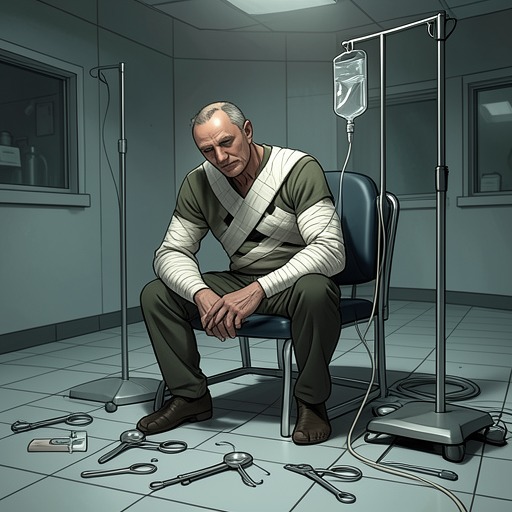
Benway describes a more severe possible endpoint in the case of sustained, heavy heroin use. He associates large doses with permanent depression of the backbrain and a condition resembling terminal schizophrenia, marked by a lack of affect and little cerebral activity. In his account, the addict can remain conscious of surroundings without finding them emotionally meaningful, and memories of heavy addiction become flat records of external events rather than recollections animated by nostalgia. He also warns that when intake falls below the accustomed level, withdrawal returns as a bodily force.
Memory, Recurrence, and Identity
Junk reorganizes memory as well as time. The narrator says that he falls asleep while reading and that words acquire the significance of codes; he becomes preoccupied with messages and patterns. The sense of meaning is bound to a life governed by repeated doses, while recollection itself is described as a recording of events without their former emotional coloring. Addiction therefore leaves traces not only in what the narrator remembers, but in the way remembered experience is assembled and felt.
Objects and fragments act as intermittent records of that past. The book recalls old photographs of Bill Gains in Panama City, where he was carrying out a paregoric scheme involving a Chinese druggist. Elsewhere, a remembered overdose of Majoun is attached to a villa outside Tangier, where the narrator suddenly does not know where he is or who he is. He advises himself to look around and establish only an approximate orientation: he was not present for the beginning and will not be present for the end. The episode makes identity and knowledge provisional, like recollection pieced together after disorientation.
The narrative’s repeated returns to drug use, withdrawal, and fragments of earlier scenes resist a smooth autobiographical account. At its close, the writer sees himself reading to a mirror and checks that the Crime of Separate Action has not occurred—that the reflection still obeys. The image extends the book’s concern with diminished control and uncertain identity: even the self’s apparent unity is tested through an image that might cease to answer. Junk’s significance lies in this convergence of dependency and form, as recurrent need turns life into cycles and leaves personal continuity to be reconstructed from partial records.